
Exploring the Universe Through Physics
Ataklti Tesfay
10/23/20255 min read
The Language of the Universe: Understanding Physics
Physics serves as the fundamental language through which we comprehend the intricate workings of the universe. At its core, physics encompasses the study of matter, energy, and the forces that govern their interactions. The foundational principles of physics are not just abstract theories; they form the bedrock of scientific understanding, enabling us to unravel both everyday occurrences and cosmic phenomena.
One of the key frameworks in classical physics is Newton's laws of motion. These three laws articulate how objects move in response to forces, providing insights that apply to various situations, from the motion of a falling apple to the trajectory of planets. By understanding these principles, we can predict the behavior of physical systems, making Newton's work essential for both practical applications and theoretical explorations.
The laws of thermodynamics further deepen our understanding, revealing the behavior of energy in different systems. From the transformation of energy to its conservation, these laws govern processes that sustain life and technology alike. They inform not only mechanical systems but also complex biological and environmental interactions, emphasizing the interconnected nature of physical laws.
Einstein's theory of relativity represents a significant departure from classical mechanics, introducing the concept that space and time are interwoven dimensions that affect the motion of objects. This groundbreaking theory underscores the intricate structure of the cosmos, illustrating how massive bodies like stars and galaxies warp the fabric of space-time itself. Such revelations demonstrate that physics provides a systemic way to comprehend universal phenomena at scales previously unimagined.
Overall, physics stands as a universal language, articulating the principles that underlie everything from subatomic particles to vast galaxies. This interconnectedness highlights not only the elegance of the laws governing the universe but also their indispensable role in enhancing our understanding of existence itself.
From Atoms to Galaxies: The Scale of the Cosmos
The universe is a grand tapestry that weaves together the incredibly small and the astonishingly large. At one extreme, we have atoms, the fundamental building blocks of matter, which consist of protons, neutrons, and electrons. These particles are governed by the principles of quantum mechanics, a branch of physics that describes phenomena at the atomic and subatomic levels, where traditional laws of physics appear to falter. The fascinating world of quantum mechanics reveals behavior so counterintuitive that it challenges our basic understanding of reality. For instance, particles can exist in multiple states simultaneously, leading to concepts such as superposition and entanglement, fundamental aspects of the quantum realm.
As we expand our perspective from atoms to molecules, we begin to witness the interactions that define chemistry and the materials around us. However, the bridge linking these tiny components to the cosmos lies in the fundamental forces of nature. Gravity, one of the four fundamental forces, governs not only how atoms form complex structures but also how these structures, from molecules to planets, interact across vast distances. The work of scientists like Isaac Newton and Albert Einstein has been pivotal in helping us understand the attractive force of gravity and its implications on both the micro and macro scales. Einsteins's General Theory of Relativity, for instance, revolutionized our comprehension of gravity by depicting it as a curvature of spacetime rather than a mere force acting at a distance.
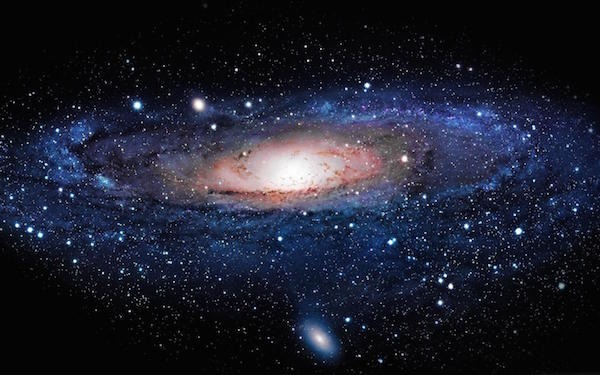
On the larger scale, we observe galaxies, colossal aggregations of stars and other cosmic matter, interacting through the same fundamental forces that operate at the atomic level. The study of these celestial bodies has unveiled not only their formation and evolution but also their ultimate fate—a journey that can be traced back to the behavior of the tiniest particles. Thus, by examining the connections between atoms and galaxies, we uncover more than mere facts; we appreciate a profound relationship that binds all matter in the universe together, showcasing the elegance of physics in uniting disparate scales.
Moments of Awe: Personal Encounters with Physics
The study of physics often evokes profound emotions, allowing individuals to connect with the universe in unique and deeply personal ways. Many have experienced moments of awe while gazing at the stars, contemplating the mysteries of the cosmos. For instance, a clear night under a vast canopy of twinkling stars can inspire reflection on the magnitude of our existence. The sight of constellations, planets, and distant galaxies can stir a sense of curiosity and wonder that transcends everyday life. This cosmic perspective reinforces the idea that we are part of something much larger than ourselves, reminding us of our humble place within the universe.
Science experiments conducted during school years often create lasting impressions on young minds. Witnessing the principles of physics in action—such as the exhilaration of a chemistry demonstration or the thrill of learning about Newton’s laws through hands-on activities—can ignite a passion for exploration. These formative experiences foster a sense of inquisitiveness, encouraging students to probe deeper into the mechanisms governing the world around them. The excitement of scientific inquiry transforms abstract concepts into tangible experiences, making physics more relatable and accessible.
Moreover, personal encounters with physics extend beyond the classroom; they can manifest in everyday life. Consider the feeling of awe when observing the intricate patterns of waves crashing against the shore or witnessing the beauty of a sunset, which can be explained through physical principles. These moments highlight the interconnectedness of nature and the laws that govern it, revealing the elegance of physics in our environment. Overall, these personal narratives serve to illustrate the emotional resonance of physics, showcasing how it not only explains our universe but also fosters a sense of wonder and curiosity in those who explore it.
Embracing the Unknown: The Future of Physics and Cosmology
The future of physics and cosmology promises to be a captivating journey into the realms of the unknown. As scientists continue to probe the fundamental nature of reality, new questions emerge, challenging our existing paradigms. Topics such as dark matter and dark energy are at the forefront of research, representing significant aspects of the universe that remain elusive. The quest to understand these phenomena is not just a matter of unraveling mysteries; it is a critical pursuit that could redefine our understanding of the cosmos.
Moreover, quantum entanglement presents another fascinating area of exploration within the field. This phenomenon, where particles become interconnected regardless of the distance separating them, challenges traditional notions of locality and causality. As physicists strive to unravel the complexities of quantum mechanics, they are also motivated to explore its implications for information transfer and communication technologies. These advancements underline how curiosity fuels scientific inquiry and innovation.
In the pursuit of a unifying theory, researchers are exploring various models that could potentially link the realms of general relativity and quantum mechanics. The existence of theories such as string theory and loop quantum gravity showcases the diversity of thought in the scientific community and the willingness to challenge the status quo. Future advancements may very well alter our conceptual framework, encouraging new generations of physicists to engage with the profound questions that linger at the edge of human knowledge.
As we venture further into the depths of physics and cosmology, the importance of inquiry cannot be overstated. Embracing the unknown fosters a culture of critical thinking and imagination. These traits are essential for developing a robust understanding of the universe and supporting the next wave of breakthroughs that may lead to answers we have yet to conceive. Thus, the collective journey into these mysteries not only broadens our knowledge base but also inspires the scientific spirit that is crucial for future discoveries.